From its revival in 2001 to its work with barley, explore Bruichladdich, its different styles and our Rhinns and...
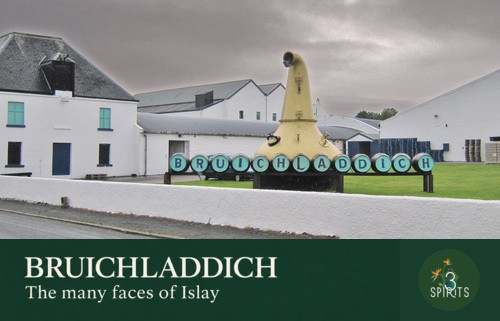
From its revival in 2001 to its work with barley, explore Bruichladdich, its different styles and our Rhinns and...
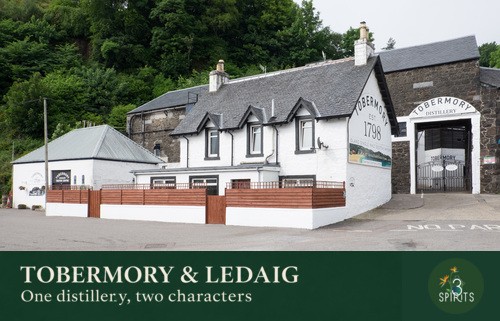
Tobermory makes two styles of whisky on the Isle of Mull. Explore its history, Ledaig’s character and the story of an...
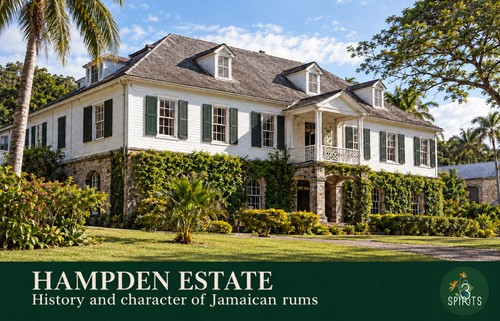
From Trelawny to independent bottlings, explore Hampden’s history, fermentation methods, marks and the rums in our...
At the foot of Ben Nevis, this Highland distillery has been making whisky since 1825. Discover its history, its ties...
An accessible FAQ covering the basics of whisky: production, types, producing regions, age, cask influence, peat,...
No featured images
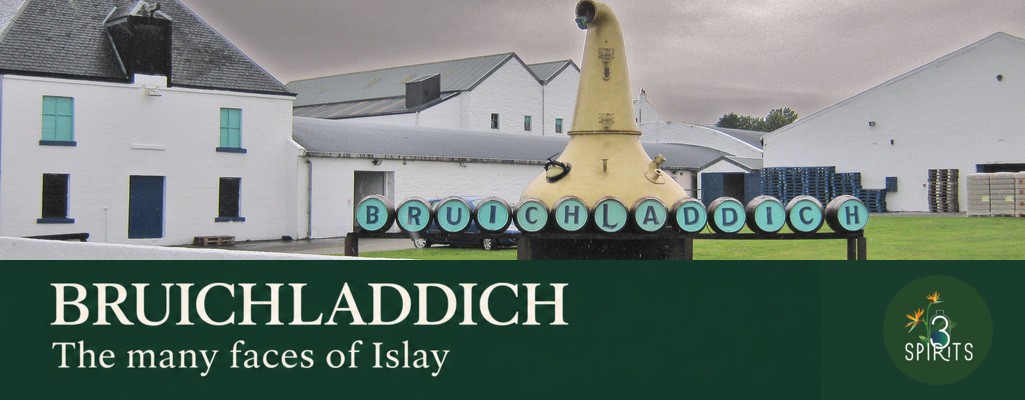
Bruichladdich is about more than peat. This Islay distillery makes the unpeated whiskies that carry its name, alongside its two major smoky families, Port Charlotte and Octomore. To explore it, we have also chosen two less familiar names: Rhinns and Lochindaal, both in our selection from The Roots. 1, 7
Behind these labels are a distillery designed in the nineteenth century, a takeover that came down to a matter of minutes, and a particular interest in barley. That is the story we would like to share with you.
In 1881, William, John and Robert Harvey set out to build Bruichladdich on Islay. Their family already had connections with the Yoker and Dundas Hill distilleries in Glasgow. 2
The location met practical needs. The western shore of Loch Indaal offered sheltered anchorage, while the slope allowed gravity to help move production along. Robert, a trained engineer, helped design a purpose-built distillery with a central courtyard and tall stills. 2
It was far from an uninterrupted success. Family disagreements, economic difficulties and changes of ownership run through its history. The chapter that best explains modern Bruichladdich begins with another closure, in 1994. 2, 3
When production stopped, two employees stayed to look after the site and its casks. Over the next seven years, the spirits continued to mature even though the stills were silent. The distillery now recalls the role these two custodians played in protecting its stocks. 3
Wine merchants Mark Reynier and Simon Coughlin led the takeover with a group of investors. According to the distillery’s account, the deal required £6.5 million to be in place before noon on 19 December 2000. A final transfer was delayed. The money eventually arrived at 11.58 am: two minutes before the deadline. 10
Jim McEwan joined the venture to lead production. After the buildings and equipment had been restored, distilling resumed on 29 May 2001. The distillery’s history even records the time: 8.26 am. The takeover in 2000 and the restart in 2001 were two separate milestones. 2
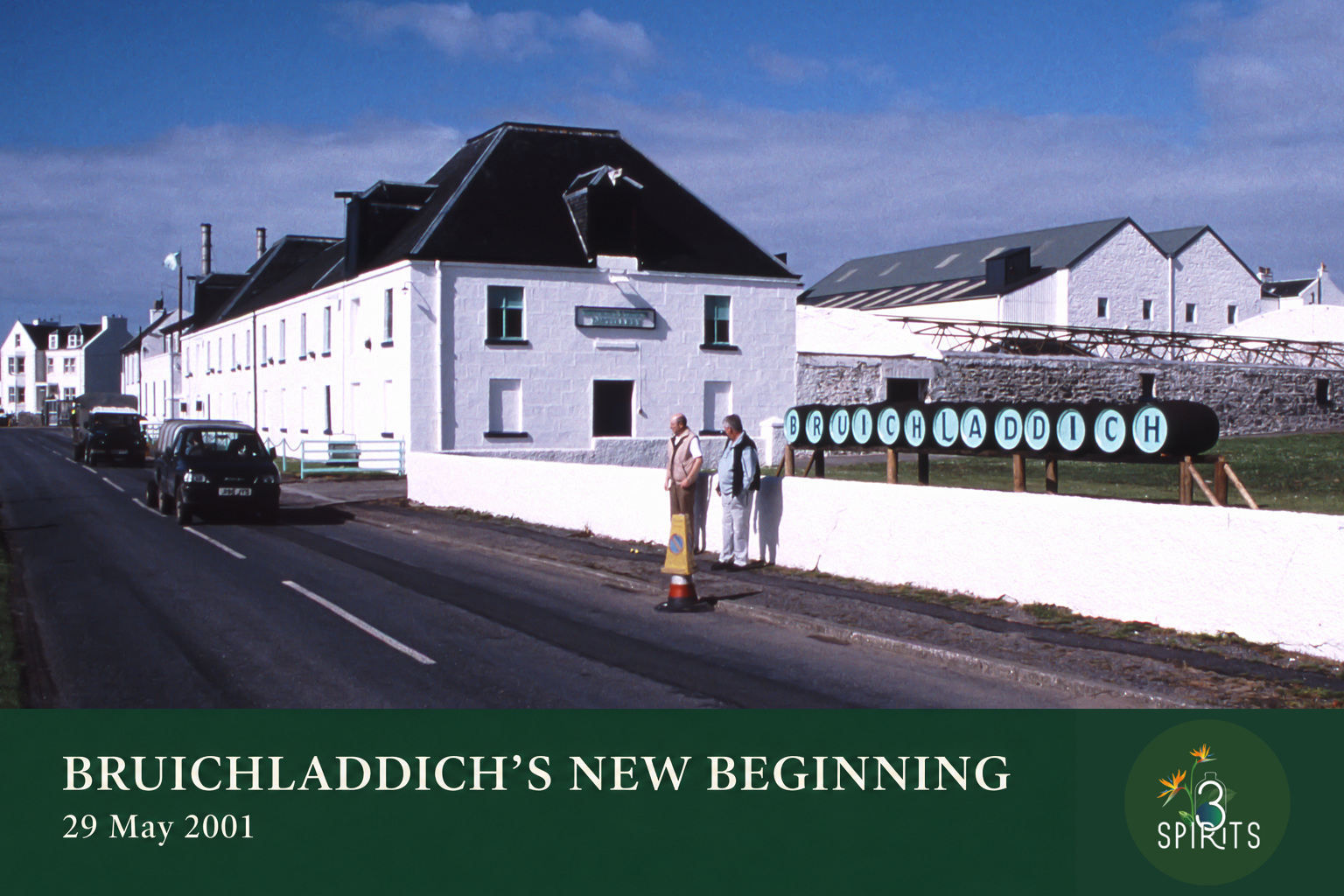
Archive view described by its photographer as the morning of the reopening on 29 May 2001.
The new team brought a perspective shaped by wine: an interest in the origin of the raw material, its harvests and the people growing it. At Bruichladdich, barley became a subject in its own right. 10
The official timeline records a first harvest and distillation of organic barley in 2003. An Islay barley project began in 2004 with farmer Raymond Stewart. The distinction matters: being a distillery on Islay does not mean every whisky is made from barley grown on the island. 4
The distillery has also explored heritage Bere barley, with its six rows of grain, alongside different varieties, regions and farming methods. In an article about these trials, it describes comparisons between barley of the same variety grown in two regions and then processed in the same way. 5
This work offers another way into tasting. Beyond age and cask type, we can take an interest in what was harvested. It does not allow us to assign every flavour automatically to a particular soil; it does explain why barley provenance plays such a prominent role in the distillery’s releases.
Bruichladdich can mean the place where the whisky is made or its unpeated range. This double use explains some of the confusion. The official presentation distinguishes three main families. 1
| Range | Style described by the distillery |
|---|---|
| Bruichladdich | Unpeated single malt, including The Classic Laddie |
| Port Charlotte | Heavily peated single malt |
| Octomore | Super-heavily peated single malt |
These names are useful guides rather than complete descriptions of every bottle. Barley, distillation, casks and bottling strength then create different expressions. For an explanation of peat’s role in production, you can also read our whisky guide. 1
According to the distillery, The Classic Laddie’s turquoise colour recalls the water outside its buildings on a bright spring day. 1
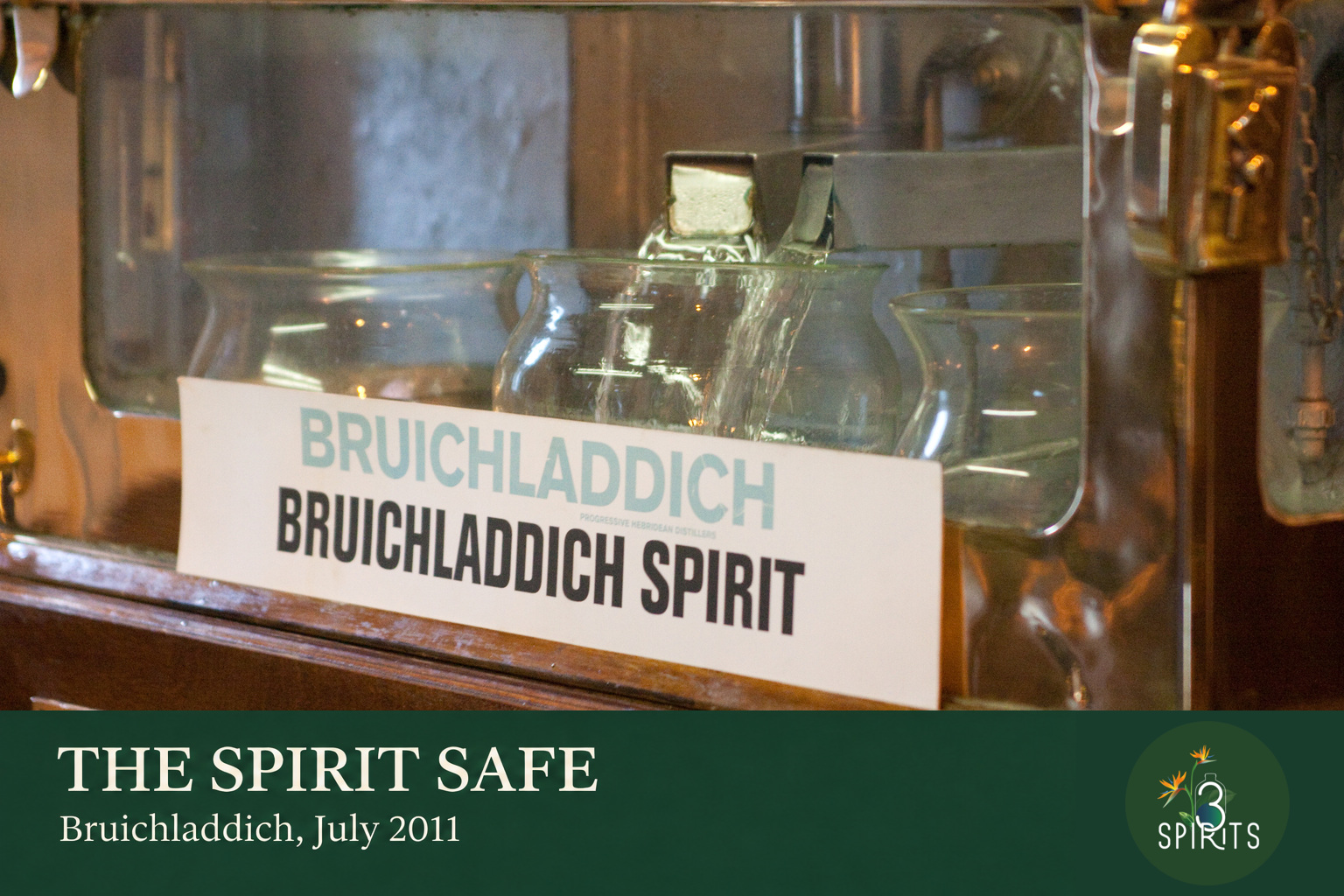
Bruichladdich’s spirit safe, photographed on 5 July 2011.
The new owners’ background in wine is reflected in their interest in casks. In its account of the revival, the distillery explains that it used wine casks, partly to give some of the inherited stocks a new home after years in tired wood. 10
It would nevertheless be too narrow to see Bruichladdich only through finishes. Its Thirty Aged Years, for example, spent its entire maturation in former bourbon casks. That is another approach, described by the distillery in terms of toasted oak, honey and vanilla. These notes refer to this particular official expression. 3
Since 2003, the distillery has also had its own bottling hall. Its timeline links this investment to the intention of bottling its own single malts on Islay. This describes its official operation; it does not establish where every independent selection was bottled. 4
Our Rhinns 2011 from The Roots needs a little explanation. The bottler describes a combination of one-third Bruichladdich distillate and two-thirds Port Charlotte. It should therefore not be described as unpeated simply because of the distillery’s name. 7
For Lochindaal 2010, The Roots records distillation in December 2010, bottling in July 2025 and 14 years of maturation in a barrel. Its notes mention warming smoke, sweetness and earthy, farm-like flavours. These are the bottler’s descriptions. 7
Rhinns and Lochindaal are not two additional official ranges to add automatically to the three above. Here, they offer a chance to discover other expressions produced at Bruichladdich through the work of an independent bottler.
Some anecdotes sound as though they were invented for a label. Bruichladdich tells the story of Yellow Submarine itself. In 2005, Islay fishermen John Baker and Harold Hastie spotted a remotely controlled submersible offshore. It was brought back to the distillery and kept there until the British Ministry of Defence came to collect it. 6
The episode gave a whisky release its name. The distillery returned to the story in 2018, then again with Yellow Submarine [Reclassified] in 2026. The joke left a lasting mark on its bottlings. 6
It helps explain Bruichladdich’s sometimes irreverent tone: a distillery that can discuss provenance and maturation seriously while still enjoying a good story.
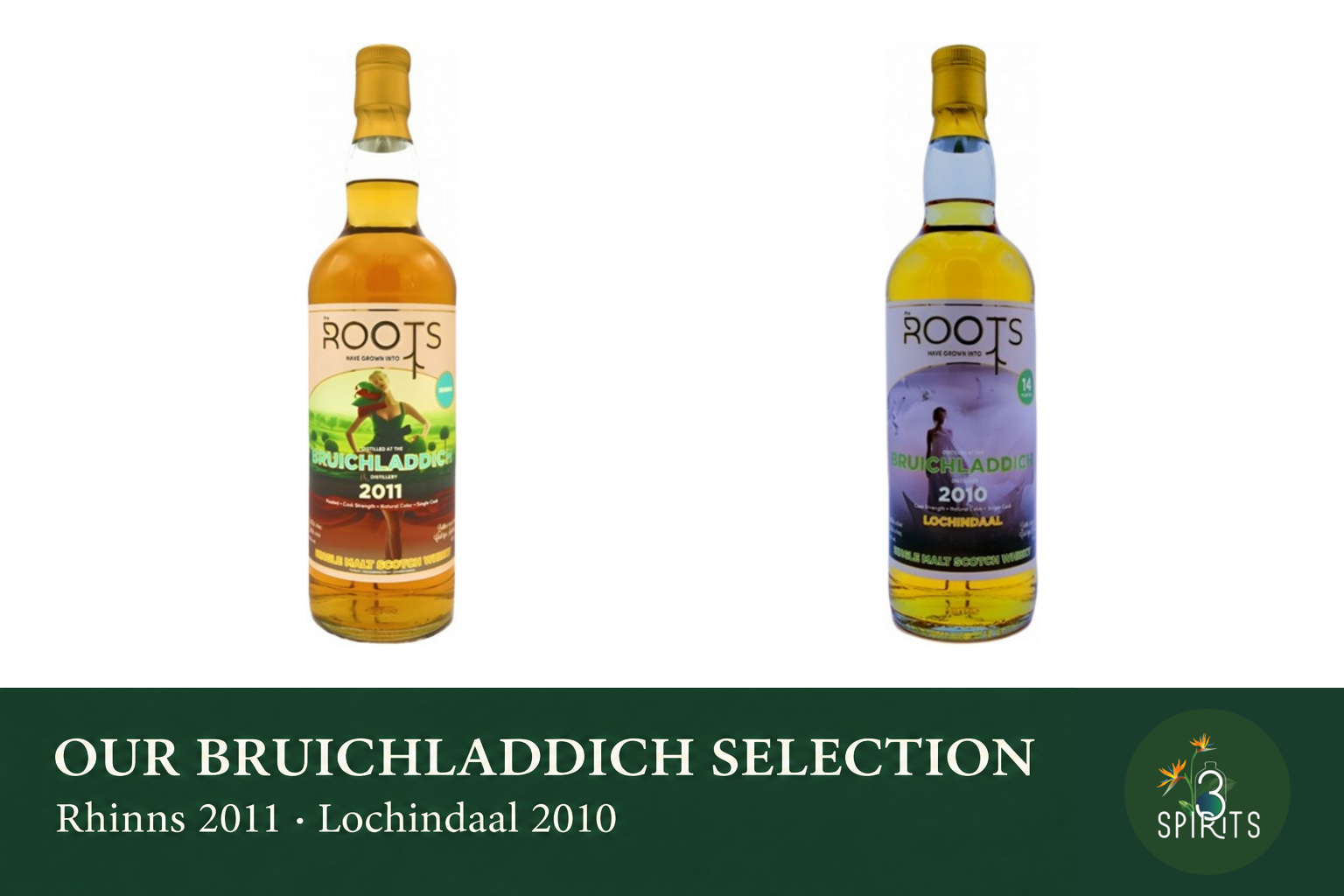
Our selection from The Roots: Rhinns 2011 and Lochindaal 2010.
We offer two selections from The Roots to explore these expressions. Both were available when this article was checked; each product page shows the latest availability. 8, 9
| Bottling | Age, ABV and volume | What makes it distinctive |
|---|---|---|
| Rhinns 2011 — The Roots No.15 | 12 years · 52.3% ABV · 70 cl | Combination of Bruichladdich and Port Charlotte distillates; hogshead; 199 bottles |
| Lochindaal 2010 — The Roots No.23 | 14 years · 52.8% ABV · 70 cl | Peated expression; barrel; 155 bottles |
Click on each selection’s name for the details. If you would like to tell us about the whiskies you enjoy, write to us: we will help you choose a bottle to suit your tastes.
Enjoy responsibly. For adults only.
Article written by 3spirits.
Sources consulted on 21 November 2026. Tasting notes are attributed to the producers or pages cited.
Bruichladdich-Islay.jpg — Fumaro, 2009 · CC BY-SA 3.0
Bruichladdich, the reopening morning — Heikki Immonen · CC BY 3.0
Bruichladdich spirit safe — Michael McKechnie, 2011 · CC BY 2.0
Photographs cropped and resized, banners added by 3spirits. Adaptation of the 2009 view distributed under CC BY-SA 3.0. The 3spirits logo remains a separate trademark.
 Ben Nevis: the distillery’s history and the character of its whiskies
Hampden: the distillery’s history and the character of its rums
Ledaig and Tobermory: one distillery, two characters on the Isle of Mull


Leave a comment