Tobermory makes two styles of whisky on the Isle of Mull. Explore its history, Ledaig’s character and the story of an...
Tobermory makes two styles of whisky on the Isle of Mull. Explore its history, Ledaig’s character and the story of an...
From Trelawny to independent bottlings, explore Hampden’s history, fermentation methods, marks and the rums in our...
At the foot of Ben Nevis, this Highland distillery has been making whisky since 1825. Discover its history, its ties...
An accessible FAQ covering the basics of whisky: production, types, producing regions, age, cask influence, peat,...
An accessible FAQ covering the basics of rum: production, raw materials, producing regions, styles, ageing, added...
No featured images
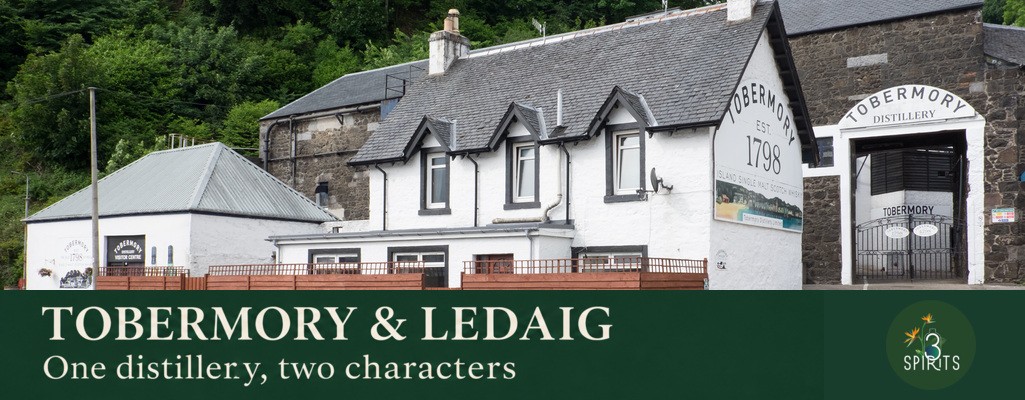
Tobermory and Ledaig come from the same distillery on the Isle of Mull. Today, the first name identifies its unpeated whiskies; the second, its smoky expressions. That distinction is useful, but some older bottles tell a less straightforward story. Our 1994 Ledaig from Swell de Spirits is a case in point: it is unpeated. 2, 3
To understand these two names, we need to return to Tobermory’s harbour, a kelp merchant who became a distiller, and the decisions that helped restore the distillery’s character.
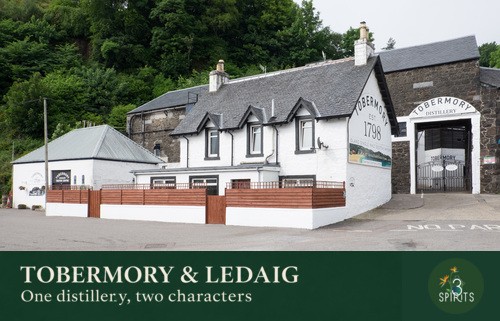
The distillery stands in the small Scottish town of Tobermory, on the Isle of Mull, known for the colourful buildings along its harbour. Founded in 1798, it is described by its owner, CVH Spirits, as the island’s only distillery. Its production water comes from the Gearr Abhainn stream. 1, 3
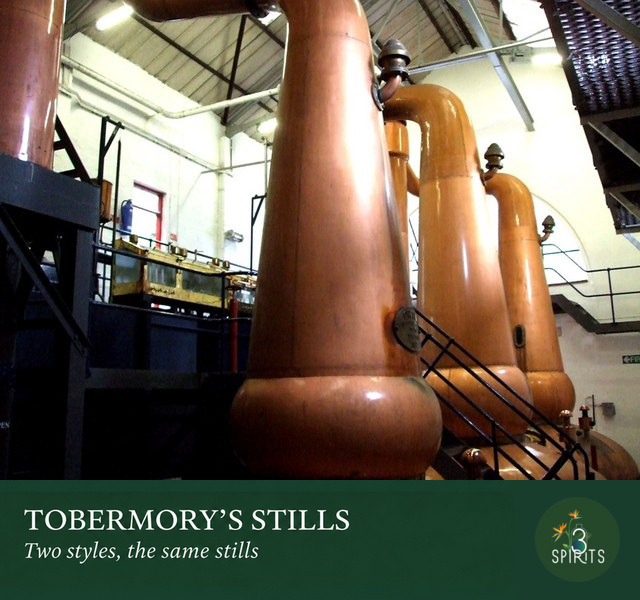
This setting is part of its identity. It cannot, however, explain everything in the glass. Raw materials, production choices and casks also matter. The clearest example is here at the distillery: the same stills produce both styles in the range, Tobermory and Ledaig. 1
You can therefore enjoy one without necessarily finding the same sensations in the other. That is part of what makes this distillery worth exploring beyond a single bottle.
The founder, John Sinclair, had interests beyond whisky. The Mull Museum’s archive catalogue describes him as an entrepreneur involved in the kelp industry before establishing the distillery in 1798. The museum also holds documents relating to his land and business activities in Tobermory. 4
This detail places the distillery’s beginnings within the harbour’s working life: distilling was one of the ventures of a man whose business extended well beyond whisky.
Ledaig is also a historic name for the site. In an interview published in 2021, Julieann Fernandez recalls that the distillery once bore this name, which she translates as “safe haven”. She also describes a past marked by financial difficulties and closures. The founding date of 1798 does not mean the stills have operated continuously for more than two centuries. 5
A turning point came in 1993, when Burn Stewart acquired Tobermory. Ian MacMillan, who helped restore it, discussed this period in an interview published in 2015. He explained that he reviewed the equipment and production methods to create a fuller spirit, in keeping with his vision of a western Highland whisky. 6
His account provides an important reference point: he dates the reintroduction of peated Ledaig to 1996, after production had stopped some years earlier. He also emphasises how long it takes for changes at a distillery to become apparent in the whiskies released for sale: maturation has to run its course. 6
This history is a reason to read older labels carefully. Today’s distinction between the two names is a useful guide to the contemporary range; it does not remove the need to check the details of an older vintage.
Production stopped again in 2017, this time for refurbishment, before the distillery reopened in 2019. When the work was announced, Alan Wright, then an executive at Distell, told WhiskyCast that it included work on the buildings and stills. He also reported that copper removed from old stills had been recycled for the 42-year-old Ledaig Dùsgadh edition. 7
The closure also made room for a gin still brought from South Africa. Julieann Fernandez, who was involved in developing the gin, discussed this addition in her 2021 interview. The refurbishment therefore went beyond whisky, opening a new chapter of production at the site. 5
In the current range, Tobermory is the unpeated single malt, while Ledaig is the peated single malt. Their difference begins before distillation. 1, 3
Peat is used during the drying of the malt. As it burns, its smoke introduces phenolic compounds to the barley, contributing to the whisky’s smoky character. The intensity and duration of this exposure are among the factors that influence the result. Peat is not added to the cask or the bottle. 8
The distillery’s guide also explains that two peated whiskies can have very different profiles. The peat used, distillation and maturation all contribute to that variety. The word “peated” cannot describe a whole tasting experience on its own. 8
At Tobermory, the two styles share their stills but are made in separate production cycles during the year, as described in WhiskyCast’s 2017 interview. Smoke distinguishes the ranges; there is much more to the distillery’s work. 1, 7
Tobermory 12 Year Old offers a useful starting point. Its official tasting notes describe fruit, orange and other citrus, with vanilla and spices. On the palate, the distillery also mentions creamy caramel, cinnamon and clove. These descriptions refer to this particular expression. 9
For Ledaig 10 Year Old, the distillery describes smoke with briny notes, lightly medicinal touches, pepper and dried fruit. Vanilla and malt complete the picture. The difference is more than extra smoke: the aromatic register changes too. 10
A 2022 interview with Julieann Fernandez and Brendan McCarron offers another perspective. They describe pineapple and fresh orange peel in Tobermory’s new make spirit. For Ledaig, McCarron emphasises particularly intense smoke with industrial associations. These are their descriptions of the spirits before the influence of maturation in wood. 11
These pointers help when approaching a bottle, without forcing every vintage and cask into a single profile.
In the same interview, the two professionals explain that Tobermory’s spirit needs a carefully chosen cask. Julieann Fernandez mentions American oak and former bourbon casks in particular. For Ledaig, they highlight the value of refill casks, which allow more of the spirit’s own character to come through. 11
That does not rule out more pronounced combinations. The official Sinclair Series includes a Ledaig first matured in former bourbon casks, then finished in Rioja red wine casks. A finish is a second period in a different type of cask, distinct from full maturation in a single vessel. 12
Julieann Fernandez also explains how stocks originally intended for Tobermory 15 Year Old continued ageing in Oloroso casks before becoming Tobermory 23 Year Old. The project relied on monitoring and tasting the casks to decide when to release the new expression. 5
When comparing two bottles, it therefore helps to read the vintage and age alongside the cask type, its previous use and the bottling strength.
Our Private Garden #11 Ledaig 1994 shows why each selection deserves individual attention. Swell de Spirits explicitly describes it as unpeated Ledaig, fully matured in a first-fill Oloroso hogshead and bottled at a cask strength of 55.8% ABV. The release comprises 357 bottles of 50 cl, produced exclusively for Los Convidados. 2
Here, “first fill” refers to the cask’s use for whisky after Oloroso; it does not mean a virgin cask with no previous contents.
Swell’s tasting notes mention very ripe pineapple, pecan pie and, after adding water, chocolate-covered banana. The announced profile centres on fruit, rich sweet notes and spices, without attributing peat to a whisky the bottler describes as unpeated. 2
Ian MacMillan’s account of peated Ledaig returning in 1996 provides useful historical context for this 1994 vintage. On its own, however, it cannot establish every production setting used for this particular cask. 6
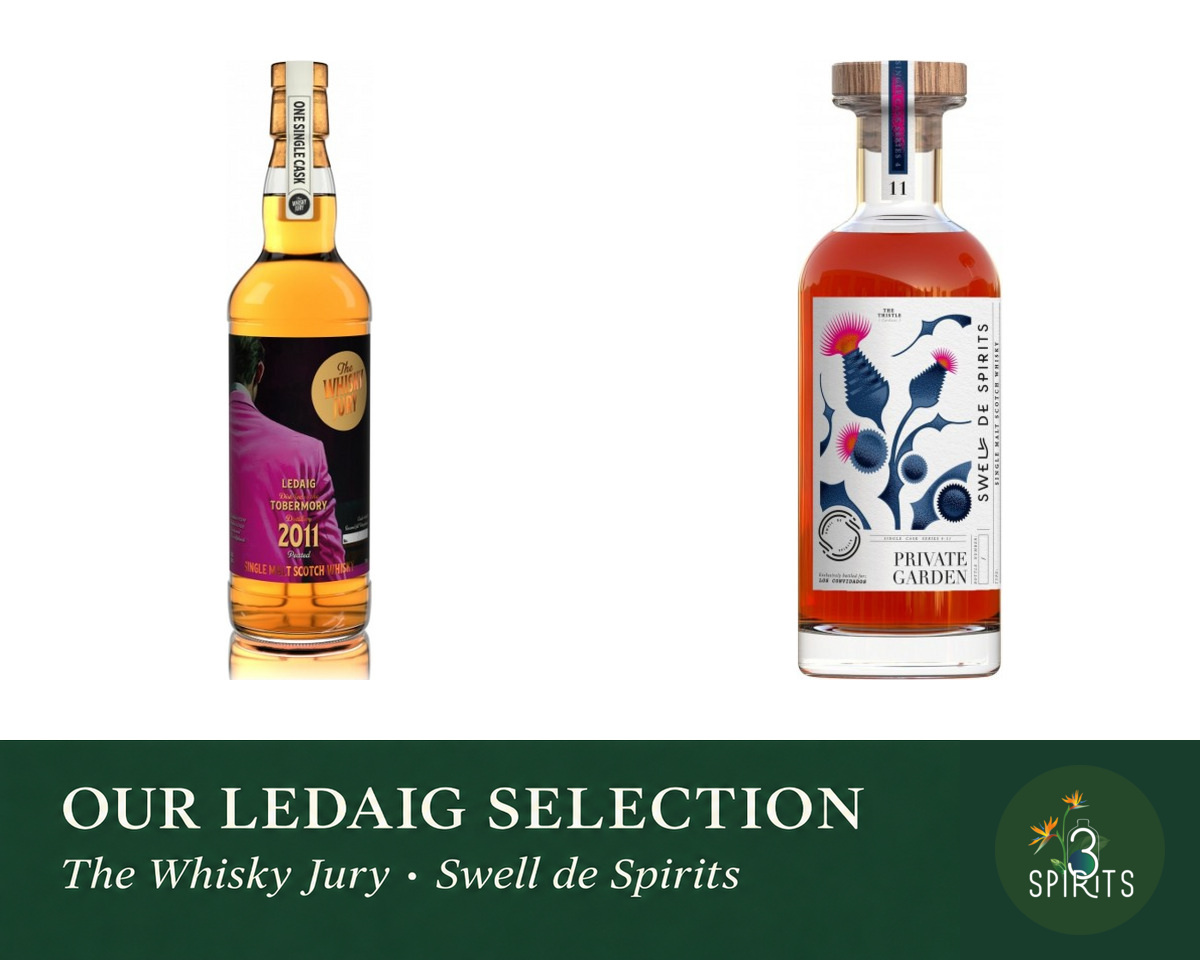
At 3spirits, independent bottlers give us a way to explore different periods and expressions of this distillery. These are the bottles available when this article was checked; each product page shows the latest availability. 13, 14
| Bottling | Age, ABV and volume | Distinctive feature |
|---|---|---|
| Ledaig 2011 — The Whisky Jury | 13 years · 56% ABV · 70 cl | Single cask; a smoky, briny and oily profile described on our product page |
| Ledaig 1994 — Private Garden #11 — Swell de Spirits | 29 years · 55.8% ABV · 50 cl | Unpeated; full maturation in a first-fill Oloroso hogshead; 357 bottles |
Ledaig 2011 and unpeated Ledaig 1994 offer two different approaches. The first explores a smoky style; the second introduces an older selection whose name alone does not reveal its character.
Click on a bottle’s name for its full details. If you are hesitating between expressions, write to us: we will help you choose according to the styles of whisky you enjoy.
Enjoy responsibly. For adults only.
Article written by 3spirits.
Sources consulted on 4 November 2026. Tasting descriptions are attributed to the producers or pages cited.
Tobermory Distillery — DeFacto, 2016, CC BY-SA 4.0.
Stills, Tobermory Distillery — Rob Farrow / Geograph, 2006, CC BY-SA 2.0.
Cropping, resizing and banners by 3spirits. Adaptations are distributed under the same licences as the original photographs.
 Ben Nevis: the distillery’s history and the character of its whiskies
Hampden: the distillery’s history and the character of its rums


Leave a comment